
Pricerr
Duration
Max People
Min Age
Tour Type
Reviews
Overview
The Hexi Corridor is an important historical region located in modern western Gansu province, China. It is renowned for its magnificent Buddhist grottoes and exquisite mural paintings. As part of the well-known Silk Road, it served as the most crucial trade route linking inner China to the historical western regions, facilitating trade into Central Asia.
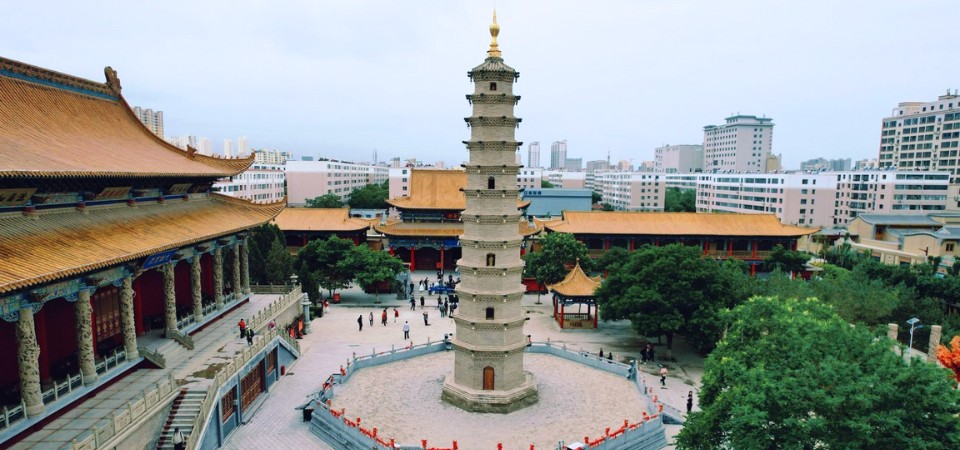
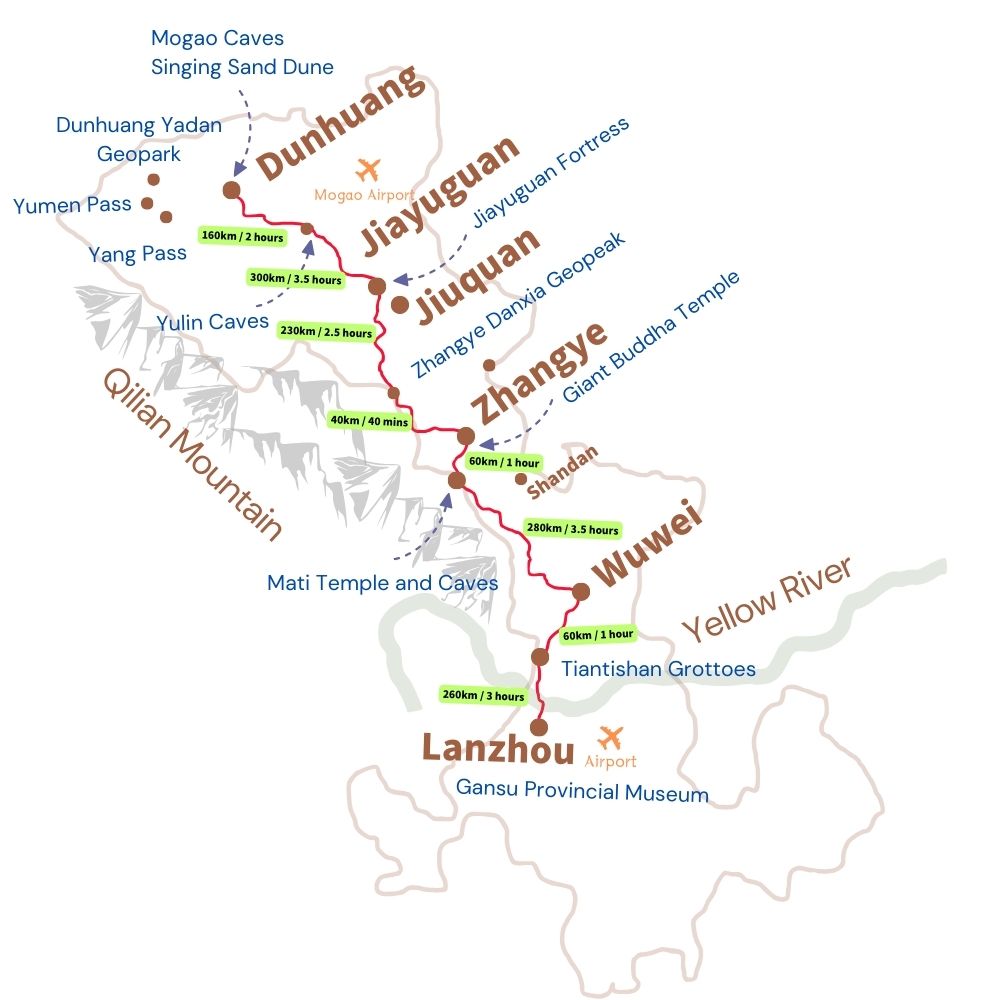
This is an 8-day private China travel where you can experience the highlights of the Hexi Corridor in Gansu with our native tour guide. The sightseeing tour spans from the capital city of Lanzhou to the oasis city of Dunhuang. You will appreciate dramatic landscapes, multicultural temples, Buddhist caves with marvelous painted sculptures and mural paintings, Silk Road ruins, and ancient handicraft experiences, all within this great artistic corridor.
Itinerary Map
Highlights
- Mogao Caves (Dunhuang) – Famous Buddhist grottoes with stunning murals and statues.
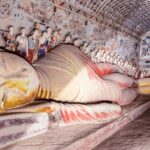
- Giant Buddha Temple (Zhangye) – Home to China’s largest reclining Buddha statue.
- Leitai Han Tomb (Wuwei) – Site of the famous Bronze Flying Horse statue.
- Zhangye Danxia Geopark – Vibrant, rainbow-colored mountains in the Geological Park.
- Crescent Lake & Mingsha Dunes (Dunhuang) – Scenic desert oasis and massive sand dunes.
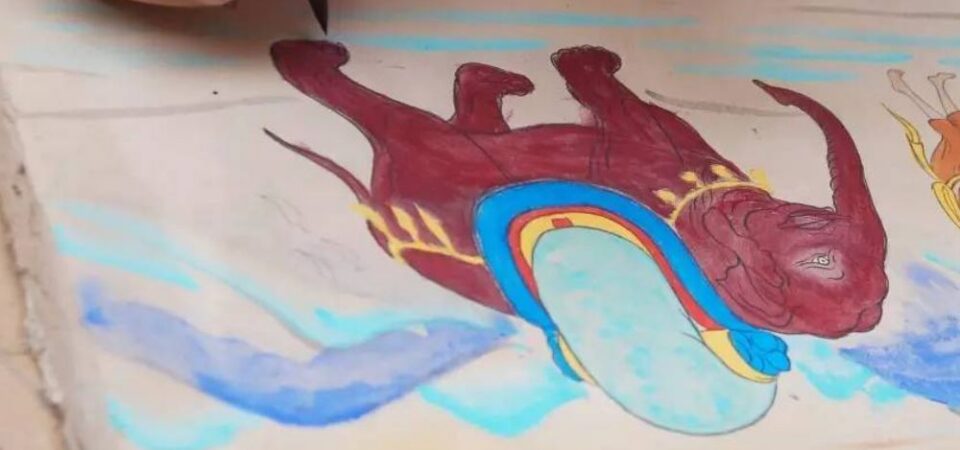
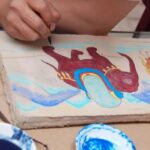
- Dunhuang Mural Handcraft Experience – Learn the ancient art of mural painting, recreating the beauty of Dunhuang's famous Buddhist frescoes.
- Private tour.
- Boutique accommodation, private transportation, and highly knowledgeable guides.
Included & Excluded
- Private air-conditioned vehicle
- 5 nights in local 5-star hotels plus 2 nights 4-star hotel
- 7 breakfasts, 6 lunches, 6 dinners
- Entrance fees (included at all sites)
- English-speaking guide
- Dunhuang mural painting handcraft experience
- Port pick-up and drop-off, 2 bottles of water per person per day
- Alcoholic drinks (available for purchase)
- Gratuities
- Other items not mentioned in the "What's Included" section
- Air tickets
Itinerary
Day 1: Arrive in Lanzhou, city exploration, welcome dinner
- Your professional tour guide will meet you at the port (airport or tratin station) of Lanzhou, then transfer to the hotel. We will explore the city after a short relax in the hotel. A welcome dinner will be served at local restaurant nearby the yellow river.
Day 2: Gansu Provincial Museum, Tiantishan Caves
- 08:00: Breakfast at the hotel
- 09:00: Visit the Gansu Provincial Museum. With a rich cultural heritage and numerous precious artifacts from Gansu's history, the museum houses over 86,000 pieces (or sets) of cultural relics. Notable collections include Neolithic painted pottery, Han dynasty wooden slips, treasures from the Han and Tang dynasties discovered along the Silk Road, Buddhist art, and paleontological fossils, all representing remarkable diversity.
- 12:00: Lunch in Lanzhou
- 13:30: Depart for Tiantishan Caves from Lanzhou (260 km / 3 hours)
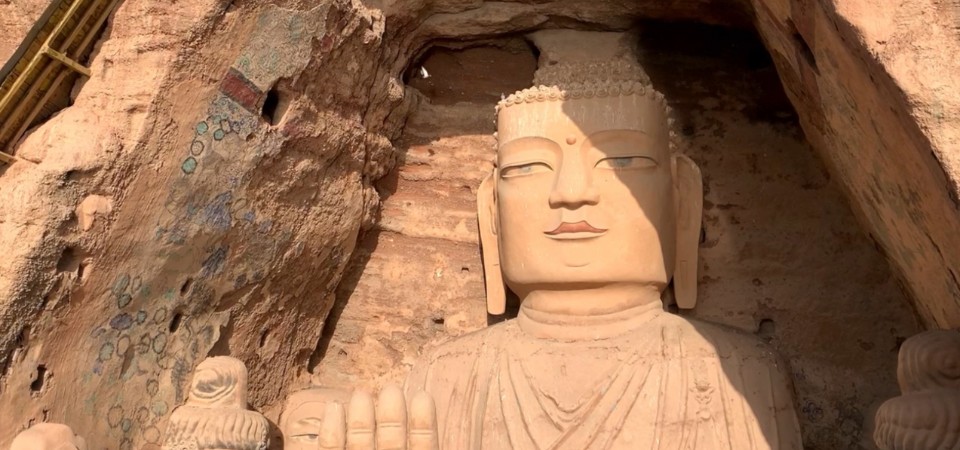
- 16:30: Visit the Tiantishan Caves, believed to have been built during the Northern Liang Dynasty 1,600 years ago. The caves contain 17 chambers with ancient murals depicting tigers and black dragons, along with scroll paintings. The highlight is the grand Buddha, whose enormous feet are protected from the reservoir’s flood by a giant, half-moon dam, allowing visitors to view the statue from various angles as they walk around it.
- 18:30: Dinner in Wuwei
- 20:00: Hotel check-in
Day 3: Leitai Tomb & Park, Mati Temple and Caves
- 07:30: Breakfast at the hotel
- 08:30: Visit the Leitai Tomb & Park. This site is renowned for the bronze Flying Horse of Wuwei, discovered here in 1969. The Flying Horse is an unofficial symbol of Gansu and was found in a secret tomb beneath this temple, which was built atop steep earthen ramparts. The statue is now displayed in the Gansu Provincial Museum in Lanzhou.
- 11:30: Lunch
- 12:30: Depart for Mati Temple and Caves from Wuwei (280 km / 3.5 hours)
- 16:00: Visit Mati Temple and Caves, a magnificent Buddhist complex consisting of a large group of caves divided into seven smaller groups, stretching up to 30 kilometers (18.64 miles) long.
- 19:00: Depart for Zhangye
- 20:00: Dinner
- 21:30: Hotel check-in
Day 4: Giant Buddha Temple, Pingshanhu Grand Canyon
- 07:30: Breakfast at the hotel
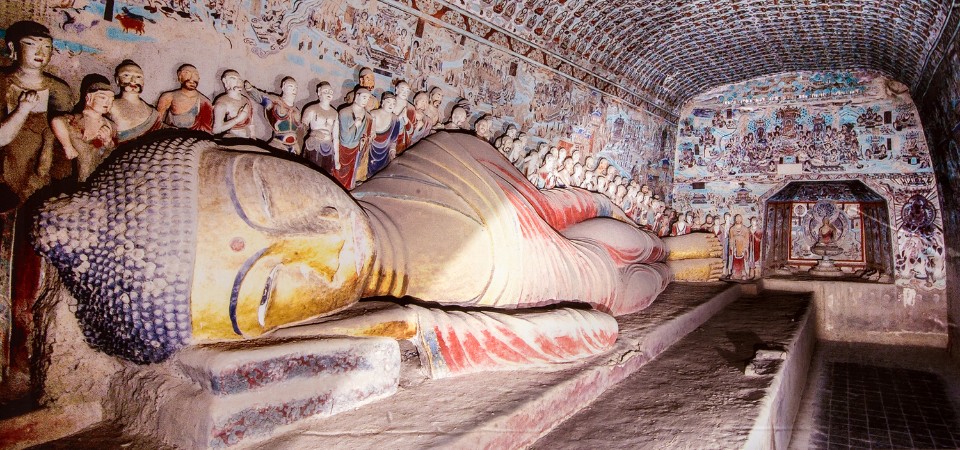
- 08:30: Visit the Giant Buddha Temple, famous for its gigantic reclining Buddha statue, which is 35 meters long and was created around 1100 during the Western Xia period.
- 11:00: Lunch
- 12:30: Depart for Pingshanhu Grand Canyon from Zhangye (57 km / 1 hour)
- 13:30: Visit Pingshanhu Grand Canyon, where nature has created extraordinary and breathtaking landscapes, with colorful mountains forming incomparable scenic views.
- 16:30: Depart for Jiayuguan (270 km / 3 hours)
- 20:00: Dinner in Jiayuguan
- 21:30: Hotel check-in
Day 5: Jiayu Pass, Yulin Caves
- 07:30: Breakfast at the hotel
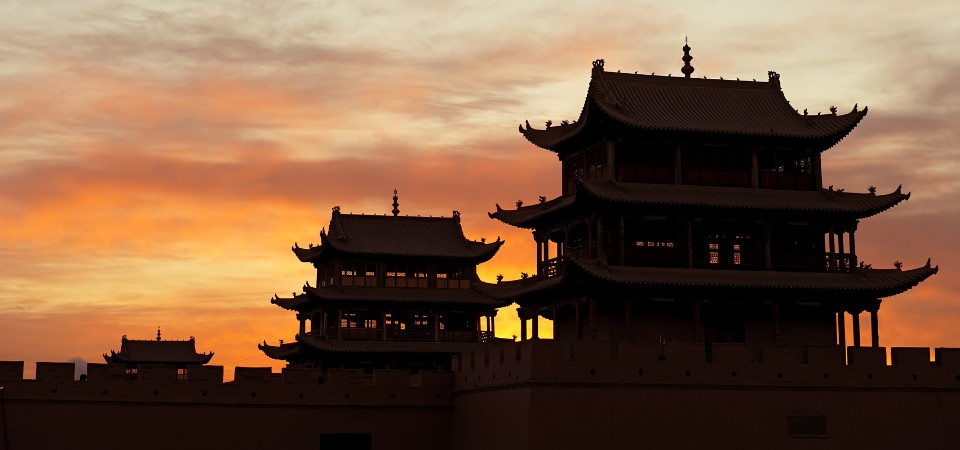
- 08:30: Visit the Jiayu Pass, the first frontier fortress at the western end of the Ming dynasty Great Wall.
- 10:30: Depart for Yulin Caves (300 km / 3.5 hours)
- 12:30: Lunch
- 15:00: Visit the Yulin Caves, the sister site of the Mogao Caves, located about 170 km away. The caves are part of the Dunhuang Caves complex and are listed as a UNESCO World Heritage Site, related to the Silk Road.
- 17:30: Depart for Dunhuang (160 km / 2.5 hours)
- 19:30: Dinner
- 21:00: Hotel check-in
Day 6: Mogao Caves, Dunhuang Mural Painting Handcraft Experience, Singing Sand Dunes, Dinner in a Private Desert
- 07:30: Breakfast at the hotel
- 08:30: Visit the Mogao Caves, located at a strategic point along the Silk Road. These 492 cells and cave sanctuaries are renowned for their statues and wall paintings, representing 1,000 years of Buddhist art influenced by trade, religion, culture, and intellectual exchange.
- 12:30: Lunch
- 14:00: Participate in a Dunhuang mural painting handcraft experience (90 min)
- 16:30: Visit the Singing Sand Dunes. The tourist area offers various activities such as ATV riding, paragliding, camel rides, and sandboarding (entry ticket included; activities are additional).
- 19:00: Dinner in a private desert area
- 22:00: Return to the hotel
Day 7: Yang Pass, Yumen Pass, Dunhuang Yardang National Geopark
- 07:00: Breakfast at the hotel
- 08:00: Depart for the Yang Pass (60 km / 1 hour)
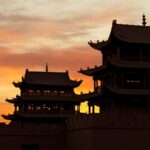
- 09:00: Visit the Yang Pass, one of the two significant western passes (the other being Yumen Pass) of the Great Wall during the Western Han Dynasty (206 BC–24 AD). It was established and used as China's western frontier defense outpost by Emperor Han Wudi (156 BC–87 BC).
- 11:00: Depart for the Yumen Pass (53 km / 1 hour)
- 12:00: Lunch
- 13:00: Visit the Yumen Pass. During the Han Dynasty (202 BC – AD 220), this pass was a critical point along the Silk Road, serving as the main route connecting Central Asia with East Asia (China), specifically the Western Regions.
- 15:00: Depart for the Dunhuang Yardang National Geopark (76 km / 1 hour)
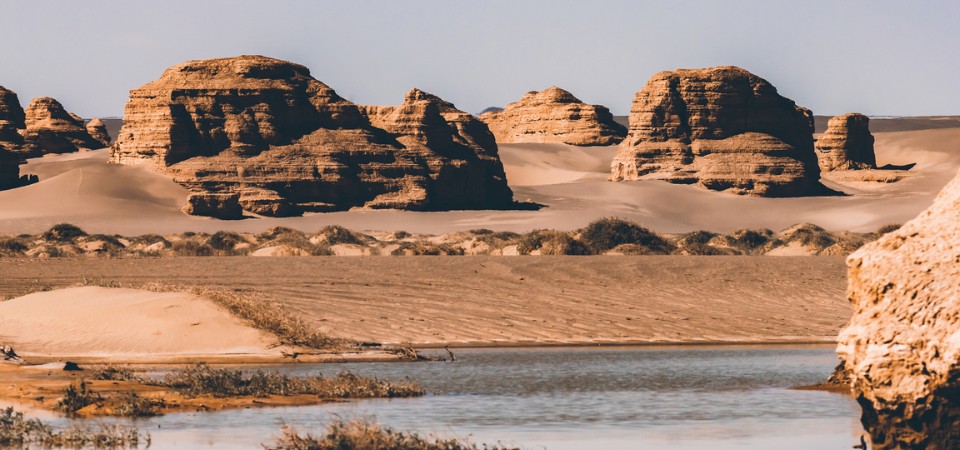
- 16:00: Visit Dunhuang Yardang National Geopark. Many explorers visit the geopark to experience its unique desert landscape, ancient legends, and bizarre rock formations.
- 18:00: Return to Dunhuang
- 20:30: Dinner
- 21:30: Return to the hotel
Day 8: Departure from Dunhuang
Take your flight to your next destination. May our paths cross again.


1 Comment
4.6
I recently joined the Hexi Corridor tour, and it was an unforgettable experience! From the ancient Silk Road history to the breathtaking grottoes and beautiful landscapes, every stop was mesmerizing. The tour was well-organized, with a knowledgeable guide who brought the region’s rich culture to life. I loved the flexibility of the itinerary, allowing us to enjoy each site fully. The accommodations were comfortable, and the entire journey was smooth and stress-free. I highly recommend this tour to anyone looking to explore authentic Chinese history and stunning scenery!